ERP implementation in six phases, from the target processes to go-live.
In every ERP project we run, the result stands or falls with the processes. First the process is written down, then comes the system. We stay as close to the software’s standard as your business allows, and automation happens in the ERP and in the IT architecture around it.
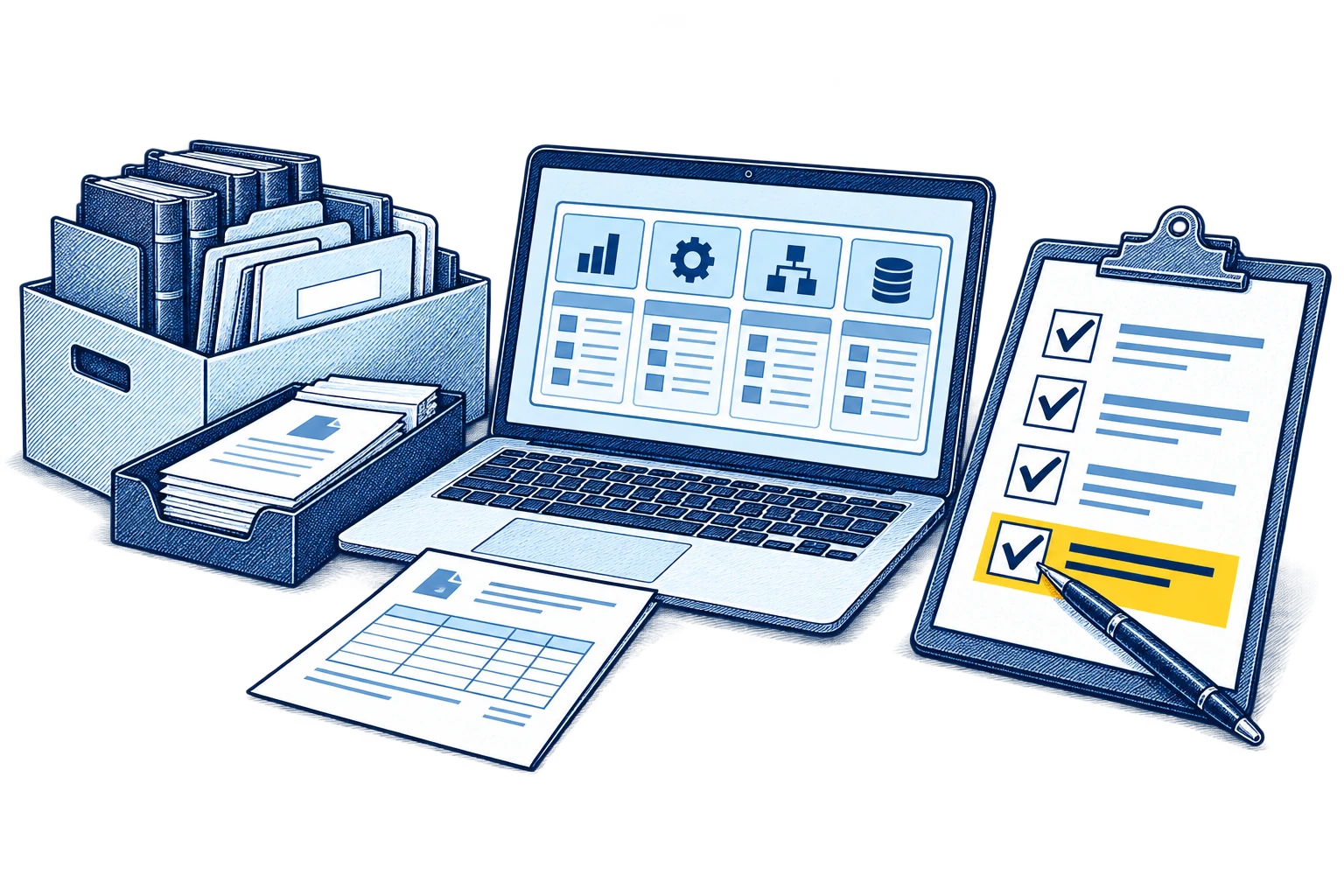
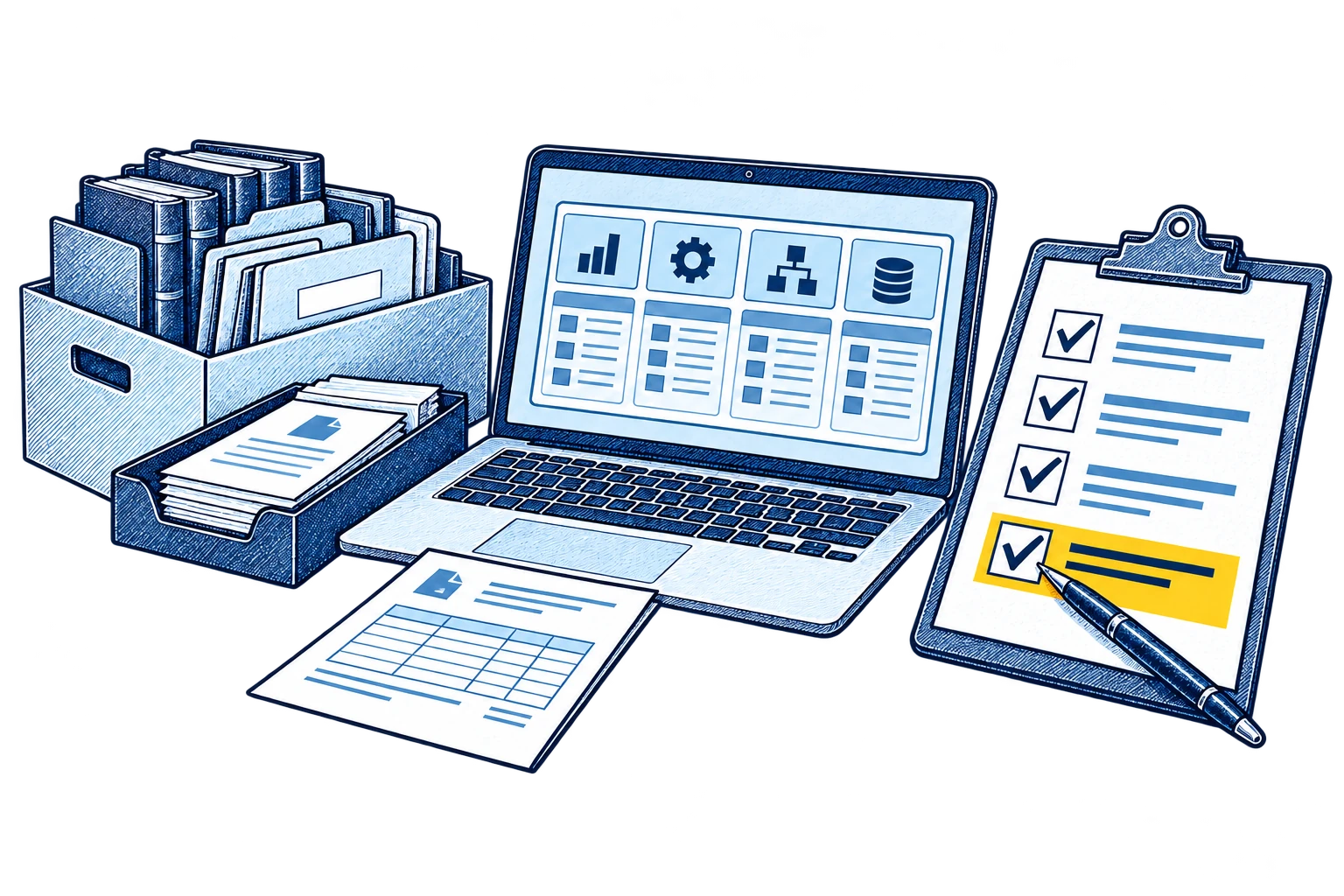
Your process or the software’s standard? Decided before the build
We go through every point where your process differs from the way the software works and ask together whether this is what makes your company different or something the old system forced on you. We replace the workarounds with the standard and build in what makes you different. Every customization you avoid is one less thing to test and fix at each software update.
Six implementation phases
-
Initiate
Agree objectives, responsibilities and the approach with your finance and management teams. -
Analysis
Review processes, entity structure, reporting requirements and interfaces. -
Design
Document the target processes, system architecture and configuration before the build. -
Build
Configure the system in sprints, migrate data and build interfaces. -
Validate
Test the processes, data and configuration against real business scenarios with your finance team. -
Deploy
Introduce the system and support the transition into ongoing operations.
Typical go-live ranges are two to six months for Lensing, three to eight months for NetSuite and four to twelve months for SAP, depending on scope and complexity.
Consulting with process understanding
Order-to-cash, roles and approval limits, the reports at the close and record-to-report are designed before the build.
What we implement
ERP systems We implement Microsoft, SAP, Oracle NetSuite, Lensing and iplicit. Which one fits is decided by your processes, and we write those down before anyone picks a vendor.
EPM platforms Planning, budgeting, forecasting and consolidation run in an EPM platform such as Oracle EPM or NetSuite EPM, connected to the ERP so plan and actuals use the same figures.
AI-supported travel and expense management Expense claims are captured from a photo of the receipt, approved in a workflow and posted to the ERP automatically. AMANN, Hasenkamp and NZYM run their expenses this way.
Integration of existing systems via middleware CRM, HR, payroll, banking and expense tools connect to the ERP in both directions, through our own platform eUnify or through Boomi, Celigo and others. The ERP stays the single source of truth.
We introduce new finance systems, rework ones that were set up badly and develop both further while they run. The system is only the vehicle for your processes, and the test of an implementation is how many manual steps it takes out of your finance team’s week.
Professional service from a single source
Our certified consultants and technical experts support you throughout the entire project. You benefit from dedicated contact persons who understand your business model, your organizational structure and your management requirements and implement solutions in a structured and practical manner.
Our services
Customer Testimonials
Qualifyze runs NetSuite OneWorld for a German parent company and a Spanish subsidiary. The planned implementation window was about four months, March to July 2024.

Svenja Frankenberger
Head of Accounting, Qualifyze
Revenue recognition used to take an employee five working days.
With NetSuite, it is now 100% automated.

Malte Fraedrich
Team Lead Finance Operations, Qualifyze
Consolidation of two companies, previously 3 working days for one person, now at the push of a button.
Martin Hoffmann
CFO and Co-CEO, ON
This tool is so valuable to us that its benefits can hardly be expressed in figures. It saves an enormous amount of time and energy and, in financial terms, represents precisely the freedom we want to give our employees in their day-to-day work.

Jan Christopher Stahl
CEO, TEVEO GmbH
We chose Cloudmaven AG because their reliable end-to-end solutions enable us to develop our company securely, precisely and scalably.
FAQs
What distinguishes Cloudmaven’s implementation approach from other approaches?
We start at the process level on every ERP we implement, Microsoft, SAP, Oracle NetSuite, Lensing or iplicit. We go through order-to-cash, procure-to-pay and record-to-report end to end with the people who run them, write them down and stay as close to the industry standard as your business allows.
On that standard a company can grow and automate. A finance process that was cobbled together in the old system, with workarounds on top of workarounds, cannot be automated and has to be tested again at every update.
How does Cloudmaven ensure that new systems can really be used for control?
Before the build we agree with your finance team and management which reports they need, by entity, cost center or project, and how often. The chart of accounts, the dimensions and the approval workflows are designed from that list, so the reports at the close come straight out of the system.
How are governance, auditability and compliance taken into account during implementation?
Roles, approval limits and workflows are set in the design phase, before anything is configured. After that every posting and every change carries a user and a timestamp in the system log, so your auditors can see in the system itself who approved what.
What role do finance and specialist departments play during implementation?
The people who do the work sit in the process workshops, because a step that runs on a phone call or lives in one person’s head is only found by asking them. In the Validate phase your finance team tests the system on real business transactions before go-live. Those who have run a process for years have to trust the new one, so they help design it.
Does Cloudmaven also support companies after go-live?
Yes. Once the first month-end close in the new system is signed off, our Customer Success Team takes over under a support contract, for every ERP we implement, and develops the system further as your requirements change. We reply within 24 hours, and within two hours in the fastest service level.
More on implementation
- NetSuite Implementation
NetSuite from process analysis through data migration to go-live, connected to your CRM, e-commerce, banking and HR systems.
- Our NetSuite Implementation Process
Cloudmaven's six-phase NetSuite implementation runs through Initiate, Analysis, Design, Build, Validate and Deploy, with financial architecture mapped before configuration.
- Implementation of EPM Solutions
Oracle EPM Cloud delivery from blueprint to go-live: discover and design, build and configure, deploy and adopt, across planning, close, tax and ESG.