





How to Accelerate Month-End Close: A Strategic Guide for Finance Leaders
A practical guide to the month-end close process, revealing key bottlenecks and proven strategies to cut close time by up to 70% and turn finance teams from reactive to growth-driving.
Every CFO knows the pattern: the calendar flips, and the finance team disappears into a tunnel of spreadsheets, reconciliations, and approval chains. The month-end close process stretches from days into weeks, and by the time the numbers land on the leadership desk, they are already stale. The opportunity to accelerate month-end close is not an incremental improvement, it is a structural shift that separates reactive finance teams from those that drive business growth.
This guide breaks down the complete financial close process, identifies the bottlenecks that slow it down, and delivers proven strategies, checklists, and technology frameworks to reduce month-end close time by 50–70%. Whether you run a single-entity operation or manage multi-currency consolidation, the principles here apply directly to your close cycle.
What Is the Month-End Close Process?
The month-end close process is the structured sequence of accounting activities that finance teams execute at the end of each period to finalize, reconcile, and report financial data. It sits at the core of the Record to Report (R2R) cycle, connecting daily transaction processing to the financial statements that stakeholders, auditors, and regulators rely on.
A well-executed close confirms that every revenue event, expense, liability, and asset movement is accurately captured in the General Ledger before the accounting period is locked.
Core Activities in Every Monthly Close
Every monthly close includes a consistent set of activities regardless of company size or industry:
- Transaction validation: Ensuring all invoices, payments, and journal entries are recorded and correctly categorized.
- Account reconciliation: Matching internal records against external statements — bank accounts, credit cards, intercompany balances.
- Accruals and deferrals: Recording expenses incurred but not yet invoiced and revenue received but not yet earned, particularly critical under ASC 606 and IFRS 15 for SaaS subscription models.
- Financial statement preparation: Generating the income statement (P&L), balance sheet, and cash flow statement.
- Review and approval: Management sign-off, period lock, and documentation for audit readiness.
Where Month-End Close Fits in the Financial Reporting Cycle
The month-end close is not an isolated event. It feeds directly into quarterly reporting, annual financial consolidation, regulatory compliance filings, and strategic forecasting. Delays in the monthly close cascade forward — a 10-day close leaves FP&A teams with barely a week of usable data before the next period begins.
For companies operating across multiple entities and currencies — common in the DACH market — the close also triggers intercompany eliminations, currency translation, and consolidated financial reporting. Each additional day in the close cycle is a day leadership operates without reliable financial intelligence.
Why Should CFOs Accelerate Month-End Close for Business Growth?
A slow close does not just delay reports. It consumes senior accounting talent on manual data entry and spreadsheet reconciliation instead of variance analysis and strategic advisory. It erodes trust when board members receive financials two or three weeks into the following month. And it creates a fragile process where one missing invoice or delayed approval can push the entire timeline.
Research consistently shows that top-performing finance teams close in 3–5 business days. The median sits closer to 6–10 days. Teams still relying on manual processes often exceed two weeks. That gap represents hundreds of hours per year redirected away from analysis and toward data wrangling.
How Faster Close Cycles Drive Better Strategic Decisions
When the Chief Financial Officer (CFO) receives accurate financials by day 5 instead of day 15, the organisation gains ten additional days of actionable insight per month. That translates into faster course corrections on underperforming product lines, earlier identification of cash flow issues, and more accurate rolling forecasts.
For SaaS businesses managing subscription revenue, deferred revenue, and complex revenue recognition under ASC 606, speed matters even more. Delayed close cycles obscure churn signals, distort ARR calculations, and weaken investor reporting.
Does a Faster Close Improve Regulatory Compliance?
Yes — directly. Regulatory compliance depends on accurate, timely financial reporting. Whether filing under GAAP or IFRS, a compressed close cycle means financial statements are reviewed more thoroughly within a tighter window, reducing the risk of restatements. Automated audit trails, built into modern ERP systems like Oracle NetSuite, ensure that every transaction, adjustment, and approval is documented without manual intervention.
8 Key Steps to Complete the Month-End Close Process
Completing the month-end close requires a structured approach to ensure accuracy and completeness. The following steps outline the core activities finance teams perform to finalise financial records.
Step 1 — Gather and Validate Transaction Data
Collect all financial data from your ERP, sub-ledgers, banking platforms, and expense management systems. Validate completeness: are all invoices posted? Are all payment batches processed? Are intercompany transactions recorded on both sides?
Automation tip: ERP-driven data feeds eliminate the need to manually export and re-enter data from disconnected systems. NetSuite’s real-time accounting capabilities ensure transactions are available the moment they are recorded.
Step 2 — Reconcile Bank, Credit Card, and Cash Accounts
Match every bank statement line to a corresponding entry in the General Ledger. Identify outstanding checks, deposits in transit, and unexplained variances. For companies processing high transaction volumes, automated bank reconciliation tools reduce this step from hours to minutes.
Three-way matching — comparing purchase orders, goods receipts, and vendor invoices — further accelerates Accounts Payable (AP) reconciliation and catches discrepancies before they reach the close.
Step 3 — Review Accounts Receivable and Accounts Payable
Verify that the AR and AP aging reports tie to the General Ledger control accounts. Review outstanding customer invoices for collectability and record bad debt provisions where necessary. On the payable side, confirm that all vendor invoices are recorded and that no duplicate entries exist.
For SaaS companies, this step also includes validating subscription billing accuracy and ensuring that revenue schedules align with contract terms under IFRS 15.
Step 4 — Record Journal Entries, Accruals, and Deferrals
Post all adjusting entries: depreciation, amortisation of prepaid expenses, accrued liabilities, and deferred revenue adjustments. Standardised journal entry templates for recurring items — payroll accruals, lease expenses, subscription revenue deferrals — reduce preparation time and error rates.
Step 5 — Evaluate Fixed Assets and Depreciation
Update the fixed asset register with any additions, disposals, or impairments. Calculate and post depreciation expense. Verify that accumulated depreciation balances match the asset schedule.
Step 6 — Prepare the Trial Balance
Generate the trial balance to confirm that total debits equal total credits across all accounts. The trial balance is the integrity checkpoint — any imbalance signals a posting error that must be resolved before financial statements are produced.
Step 7 — Generate Financial Statements (P&L, Balance Sheet, Cash Flow)
Compile the income statement, balance sheet, and cash flow statement. Perform variance analysis against budget, prior month, and prior year. Investigate material variances and document explanations.
For multi-entity organisations, this step includes financial consolidation — combining subsidiary financials, processing currency translations, and executing intercompany eliminations.
Step 8 — Conduct Final Review, Approval, and Period Lock
Route financial statements to senior finance leadership for review. Address any questions or required adjustments. Once approved, lock the accounting period in the ERP to prevent unauthorised changes. Archive all reconciliation workpapers, journal entry support, and approval records for audit readiness.
Common Bottlenecks That Slow Down Month-End Close
Common bottlenecks can slow down the month-end close, often driven by manual processes, disconnected systems, and limited visibility.
Spreadsheet Dependency and Manual Reconciliation
Spreadsheet reconciliation remains the single largest time drain in the financial close process. Manual data entry introduces errors, version control becomes unmanageable, and there is no audit trail. Teams that rely on Excel for reconciliation spend 60–70% of their close time on data collection and formatting rather than analysis.
Siloed Data Across Disconnected Systems
When financial data lives in separate platforms — one system for AP, another for payroll, a third for banking — the close becomes an exercise in data aggregation. Data silos prevent real-time accounting and force teams to export, transform, and re-import data manually. The result is delayed reconciliation and increased error risk.
Approval Delays and Last-Minute Adjustments
Approval bottlenecks are process failures, not people failures. Without clear ownership and automated routing, journal entries and financial statements sit in inboxes waiting for sign-off. Last-minute adjustments from other departments — a late vendor invoice, a corrected expense report — cascade through the close and force rework.
Lack of Real-Time Visibility Into Close Progress
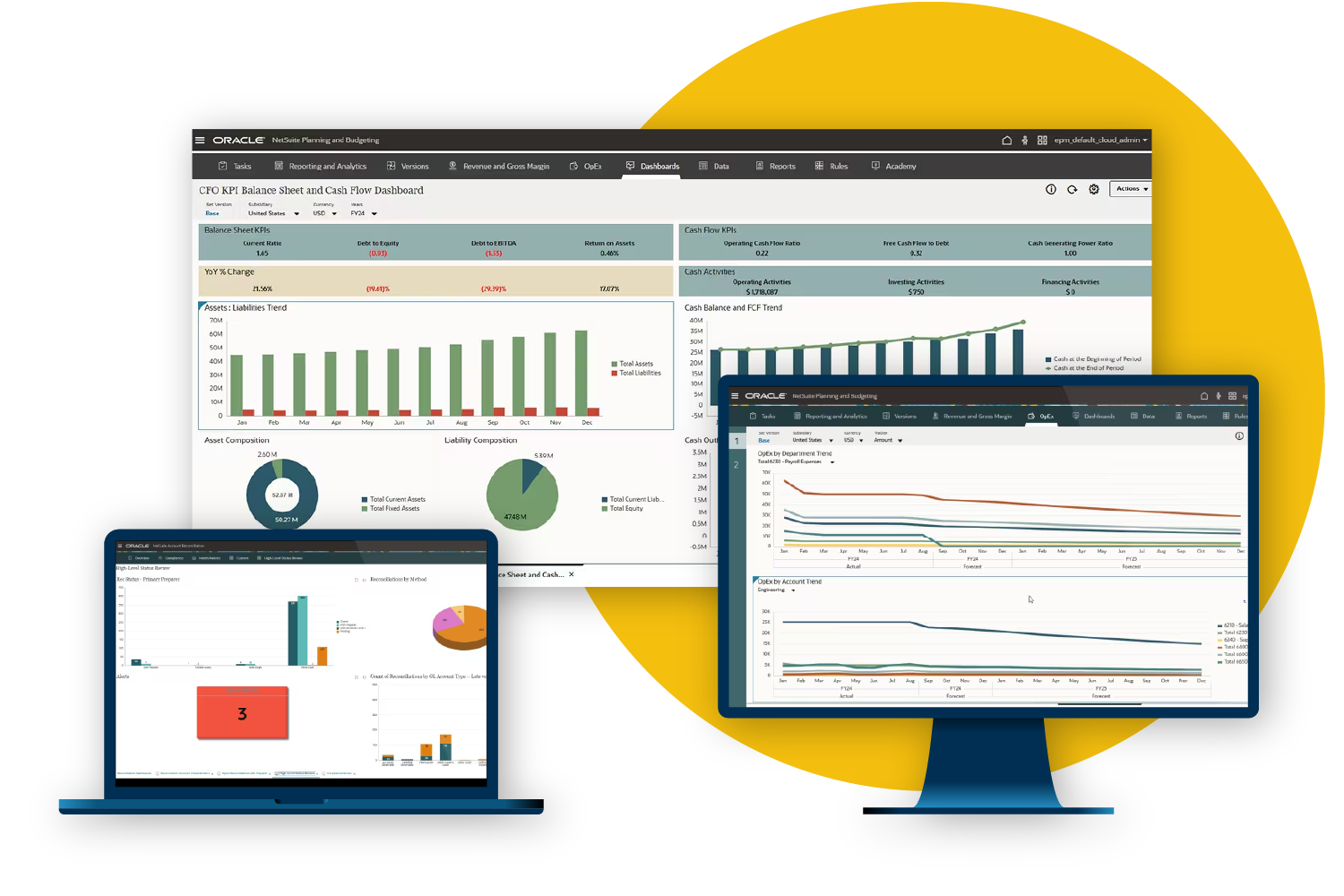
When the controller cannot see which reconciliations are complete, which journal entries are pending review, and which approvals are outstanding, the close becomes reactive. Close management software with real-time dashboards eliminates blind spots and enables proactive intervention before delays compound.
7 Proven Strategies to Accelerate Month-End Close
Accelerating the month-end close requires a mix of process optimisation, automation, and clear ownership to reduce delays and improve efficiency.
1. Front-Load Work With Pre-Close Activities
Do not wait for the month to end. Reconcile bank accounts weekly. Post depreciation entries before period-end. Pre-stage recurring accruals. Teams that front-load work consistently shave 1–3 days off their close timeline by reducing the volume of tasks that must be completed after cutoff.
2. Adopt a Continuous Close Methodology
The continuous close model distributes reconciliation and validation activities throughout the month rather than concentrating them in a closing window. Instead of batching all reconciliations into a 5-day sprint, high-performing teams reconcile daily or weekly. This approach eliminates the month-end crunch and creates a more predictable close calendar.
Continuous close vs month-end close is not an either/or decision — it is a maturity progression. Start by shifting your highest-volume reconciliations to a continuous cadence and expand from there.
3. Automate Reconciliations and Recurring Journal Entries
Month-end close automation delivers the highest ROI on the tasks that are repetitive, rule-based, and high-volume. Automated bank reconciliation, automated three-way matching for AP, and templated recurring journal entries eliminate manual data entry and reduce error rates below 2%.
Tools like FloQast, BlackLine, and Numeric provide dedicated close management capabilities. For organisations running Oracle NetSuite, native automation features — including automated revenue recognition, recurring journal entries, and real-time bank feeds — enable teams to automate close with NetSuite directly within the ERP.
4. Standardize Workflows and Close Checklists
A month-end close checklist is not a convenience — it is a control. Standardised checklists ensure that every task is assigned, every deadline is visible, and every dependency is mapped. They prevent missed steps, support onboarding, and create a repeatable process that improves with each cycle.
Build your checklist around the 8 key steps outlined above. Assign each task to a specific owner with a clear deadline and review workflow.
5. Integrate Your ERP With Banking and Expense Systems
Integration eliminates the data gaps that force manual intervention. When your ERP connects directly to banking platforms, expense management tools, and billing systems, transaction data flows automatically into the General Ledger. This creates a single source of truth for financial data and removes the need for manual imports or spreadsheet-based staging.
Cloudmaven specialises in building these integration architectures — connecting NetSuite with banking, payment, and expense platforms through middleware and custom connectors that keep data synchronised in real time.
6. Apply Risk-Based Prioritization to Account Reviews
Not every account requires the same level of scrutiny every month. High-risk accounts — deferred revenue, accrued liabilities, foreign exchange gains and losses — demand full reconciliation with line-item detail. Low-risk accounts with stable balances and minimal activity can be reviewed on a lighter cadence, with a full deep dive only quarterly.
Set materiality thresholds: investigate variances exceeding 0.5% of the account balance or a defined absolute amount, whichever is smaller. This focuses analyst time on the accounts that matter most.
7. Assign Clear Ownership With a Close RACI Matrix
Every task in the close process needs a defined owner, a reviewer, and an escalation path. A RACI matrix (Responsible, Accountable, Consulted, Informed) maps these roles explicitly. Without clear ownership, tasks fall through cracks, approvals stall, and accountability dissolves.
Publish the RACI matrix alongside your close checklist and review it after every close cycle to identify handoff failures or resource imbalances.

Let our experts advise you without obligation

Let us create an individual offer for you
How Does Automating AP and AR Eliminate Reconciliation Delays?
Automating AP and AR reduces reconciliation delays by ensuring transactions are captured, matched, and validated in real time, minimising manual work and keeping sub-ledgers accurate before the close begins.
How AP Automation Speeds Up the Month-End Close
Accounts Payable automation captures invoices electronically, applies GL codes and cost centre assignments via OCR and AI, and routes them through approval workflows without manual intervention. By the time the month ends, the AP sub-ledger is already clean, coded, and reconciled — eliminating the single largest source of month-end reconciliation delays.
Three-way matching automation further accelerates the process by validating invoices against purchase orders and goods receipts automatically, flagging exceptions for review instead of requiring line-by-line manual verification.
Why Automated Bank Reconciliations Cut Days Off Your Close
Manual bank reconciliation is time-intensive and error-prone, especially for organisations with high transaction volumes or multiple bank accounts. Automated reconciliation engines match bank statement lines to GL entries using configurable rules, resolving 80–95% of transactions without human intervention. The remaining exceptions are flagged for analyst review, cutting reconciliation time from days to hours.
How Technology Accelerates the Month-End Close Process
Technology plays a key role in accelerating the month-end close by reducing manual work and improving efficiency, enabling finance teams to streamline processes and gain better visibility across the close.
ERP-Driven Automation: From Data Entry to Financial Statements
Modern cloud ERP systems like Oracle NetSuite automate the end-to-end flow from transaction capture to financial statement generation. Real-time posting eliminates batch processing delays. Automated revenue recognition handles complex subscription models under ASC 606 and IFRS 15. Consolidated reporting across entities and currencies runs on demand rather than requiring manual assembly.
Close Management Platforms: Task Orchestration and Real-Time Dashboards
Dedicated month-end close software platforms — FloQast, BlackLine, Numeric — add a task orchestration layer on top of the ERP. They provide close checklists with task assignments, deadline tracking, and real-time dashboards that show exactly where the close stands at any moment. These platforms integrate with ERP systems to pull reconciliation data automatically and surface exceptions for review.
AI in Financial Close: Anomaly Detection, Predictive Entries, and Flux Analysis
AI-powered tools are transforming the financial close process by automating flux analysis — the comparison of account balances against prior periods, budgets, and expectations. AI detects anomalies, generates variance narratives, and suggests predictive journal entries based on historical patterns. This shifts the controller’s role from data compilation to exception review and strategic analysis.
Integration Architecture: Building a Connected Close Tech Stack
The fastest close cycles depend on tight integration between the ERP, banking platforms, expense management tools, billing systems, and close management software. Disconnected systems create data silos that force manual intervention at every handoff.
Cloudmaven builds integration architectures that connect NetSuite with the surrounding technology ecosystem — middleware solutions that synchronise bank feeds, payment data, and expense transactions in real time, creating a single source of truth that eliminates manual data entry and accelerates period-end finalization.
How Cloud ERPs Like NetSuite Accelerate Financial Consolidation
To understand how cloud ERPs like NetSuite accelerate financial consolidation, it’s essential to look at how financial data is managed and structured across the organisation. One of the key questions is whether all financial data can be unified and accessed from a single, reliable source.
Does NetSuite Provide a Single Source of Truth for Financial Data?
Oracle NetSuite’s unified data model means that all entities, currencies, and business units operate on a single platform with a shared chart of accounts. There is no need to export data from multiple systems and consolidate manually. Financial data is available in real time, enabling continuous monitoring and faster close cycles.
For SaaS companies, NetSuite’s subscription management and revenue recognition capabilities are particularly powerful. Complex billing arrangements, usage-based pricing, and multi-element revenue allocation are handled natively within the platform, eliminating the need for external spreadsheets or bolt-on systems.
Can Automated Intercompany Eliminations Reduce Close Times?
Intercompany eliminations are one of the most time-consuming steps in multi-entity financial consolidation. NetSuite automates these eliminations based on predefined rules, matching intercompany receivables and payables and generating elimination entries automatically. This reduces what traditionally takes 1–2 full days of manual work to a process that completes in minutes.
How NetSuite Handles Multi-Currency Translation and Revaluation
For organisations operating across the DACH region and beyond, multi-currency translation is a monthly requirement. NetSuite automatically translates subsidiary financials into the reporting currency using configured exchange rates, calculates unrealised gains and losses, and posts revaluation entries. This eliminates the manual currency calculations that often introduce errors and delays during the close.
Month-End Close Checklist
Pre-Close Phase (Days 1–5 Before Month-End)
| Task | Owner |
| Reconcile bank accounts (weekly cadence) | Staff Accountant |
| Post recurring journal entries (depreciation, amortisation) | Staff Accountant |
| Review AR aging and follow up on overdue invoices | AR Specialist |
| Confirm all vendor invoices received and posted | AP Specialist |
| Validate subscription billing and revenue schedules | Revenue Accountant |
| Communicate close timeline to all stakeholders | Controller |
Core Close Phase (Days 1–3 After Month-End)
| Task | Owner |
| Verify transaction cutoff — all period transactions recorded | Controller |
| Complete bank and credit card reconciliations | Staff Accountant |
| Reconcile AP and AR sub-ledgers to GL | AP/AR Specialists |
| Post accruals, deferrals, and adjusting entries | Senior Accountant |
| Execute intercompany eliminations | Consolidation Analyst |
| Prepare trial balance and investigate imbalances | Senior Accountant |
Review and Finalization Phase (Days 4–7)
| Task | Owner |
| Generate P&L, balance sheet, and cash flow statements | Controller |
| Perform variance analysis (actual vs. budget, MoM, YoY) | FP&A Analyst |
| Conduct management review and address questions | CFO / Controller |
| Post final adjustments if required | Senior Accountant |
| Lock accounting period in ERP | Controller |
| Archive workpapers and distribute financial statements | Controller |
How to Measure Month-End Close Performance
Tracking month-end close KPIs transforms the close from an opaque process into a measurable, improvable workflow. The six essential KPIs:
- Close cycle time: Business days from period-end to final sign-off. Target: 5 days or fewer.
- Error rate / post-close adjustments: Number of material corrections identified after the period is locked.
- Automation rate: Percentage of journal entries and reconciliations completed without manual intervention.
- First-pass accuracy: Percentage of reconciliations approved on first review without corrections.
- Overtime hours: Additional hours worked by the finance team during the close window.
- Process efficiency ratio: Hours required to close per million in revenue — a scalability metric.
Benchmarking Your Close: Where Do You Stand?
| Performance Level | Close Timeline | Automation Rate | Error Rate |
| Top performers | 1–3 days | 70%+ | < 2% |
| Above average | 4–5 days | 40–70% | 2–5% |
| Average | 6–10 days | 15–40% | 5–15% |
| Below average | 11+ days | < 15% | 15%+ |
If your close consistently exceeds 7 days, structural changes — not incremental improvements — are needed.
Month-End Close Acceleration Maturity Model
Level 1 — Manual and Reactive
Close processes depend entirely on spreadsheets and email-based coordination. There is no standardised checklist. Reconciliations are performed manually. Close timelines regularly exceed 10 business days. Error rates are high, and audit preparation requires significant additional effort.
Level 2 — Semi-Automated With Checklists
Standardised close checklists are in place with task assignments and deadlines. Some recurring journal entries are automated. Bank reconciliations may use basic matching tools. Close timelines average 5–8 days. The process is repeatable but still labour-intensive.
Level 3 — Integrated and Continuous Close
The ERP is fully integrated with banking, billing, and expense systems. Reconciliations run continuously throughout the month. Workflow automation handles task routing, approvals, and notifications. AI-powered flux analysis flags anomalies in real time. Close timelines consistently fall below 5 days, with minimal overtime and near-zero post-close adjustments.
A 30-Day Roadmap to Accelerate Month-End Close
Week 1 — Map Current Bottlenecks and Baseline Your Close Timeline
Document every task in your current close process. Measure how long each step takes. Identify the top three bottlenecks by time consumption and error frequency. Establish baseline KPIs: close cycle time, error rate, overtime hours.
Week 2 — Standardize Workflows and Assign Ownership
Build a detailed month-end close checklist with task-level assignments, deadlines, and dependencies. Create a RACI matrix for every close activity. Communicate the new close calendar to all stakeholders — finance, operations, HR, and leadership.
Week 3 — Deploy Automation for High-Impact Tasks
Implement automated bank reconciliation and recurring journal entry templates. If your ERP supports it, activate automated revenue recognition and intercompany elimination rules. For NetSuite users, Cloudmaven can deploy these configurations rapidly through proven implementation playbooks.
Week 4 — Review Results and Build a Continuous Improvement Cycle
Compare your Week 4 close performance against your Week 1 baseline. Identify remaining bottlenecks. Document lessons learned and refine the checklist. Establish a post-close retrospective as a standing monthly meeting to drive continuous improvement.
Financial Close Software: How to Choose the Right Tool
Key features to evaluate in close management software, focusing on the capabilities that matter most when assessing different solutions:
- Task management with dependencies: Assign, track, and sequence close activities with clear ownership.
- Real-time dashboards: Visualise close progress across tasks, owners, and entities.
- Automated reconciliation: Rule-based matching with exception-only review.
- ERP integration: Native connectivity with your General Ledger and sub-ledgers.
- Audit trail: Complete documentation of every action, approval, and adjustment.
- Multi-entity and multi-currency support: Essential for organisations with international operations.
Comparing Leading Platforms (FloQast, BlackLine, Numeric, and Others)
| Platform | Best For | Key Strength | Consideration |
| FloQast | Mid-market teams transitioning from spreadsheets | Excel-friendly interface, strong task tracking | May stretch with highly complex multi-entity structures |
| BlackLine | Large enterprises with complex compliance needs | Deep reconciliation, intercompany accounting | Higher price point, longer implementation |
| Numeric | Teams seeking AI-powered close management | AI anomaly detection, clean interface | Newer platform, fewer enterprise case studies |
| Oracle NetSuite | Organisations wanting close automation within the ERP | Unified data model, native consolidation | Full value requires proper configuration and integration |
For organisations running NetSuite, the most efficient architecture often combines NetSuite’s native close capabilities with a dedicated task management overlay and purpose-built integrations. Cloudmaven designs these architectures, ensuring that NetSuite’s consolidation, revenue management, and real-time accounting features are fully activated and connected to the surrounding tech stack.
How to Choose the Right Partner to Accelerate Your Month-End Close
Technical ERP knowledge alone is not sufficient. The partner accelerating your close must understand the financial close process from the CFO’s perspective: what drives close timelines, where audit risk concentrates, how multi-entity consolidation works in practice, and how subscription revenue and revenue recognition rules affect close complexity.
What Makes Cloudmaven the Right Choice for Finance Transformation?
Cloudmaven combines deep NetSuite expertise with specialised knowledge of integrations, middleware, and financial process consulting. We do not just implement software — we design the end-to-end close architecture: ERP configuration, banking and expense integrations, workflow automation, and reporting frameworks.
Our focus areas align directly with the challenges that extend close cycles:
- Subscription management and revenue recognition: Configuring NetSuite’s Advanced Revenue Management to handle ASC 606 and IFRS 15 requirements natively, eliminating manual revenue schedules.
- Financial consolidation: Activating NetSuite OneWorld for multi-entity, multi-currency consolidation with automated intercompany eliminations and currency translation.
- Integration architecture: Building middleware connectors that synchronise banking, payment, and expense data in real time, creating the single source of truth that eliminates manual data entry.
We help finance teams move from Level 1 (manual and reactive) to Level 3 (integrated and continuous close) — not in theory, but in practice, with measurable KPI improvements from the first cycle.
Frequently Asked Questions About Month-End Close
Top-performing teams close in 3–5 business days. The median across industries is 6–10 days. If your close consistently exceeds 10 days, process redesign and automation are warranted.
The month-end close finalises financial records for a single period. The year-end close includes all monthly close activities plus additional steps: annual audit preparation, tax provision calculations, goodwill impairment testing, and regulatory filing preparation. A strong monthly close process makes the year-end close significantly smoother.
Yes. Leading close management platforms — FloQast, BlackLine, Numeric — offer pre-built integrations with major ERP systems including NetSuite and SAP. For organisations migrating from QuickBooks or SAP, or requiring DATEV integration common in the German market, middleware connectors bridge the data flow between the ERP and DATEV’s accounting and tax reporting modules. Cloudmaven specialises in building these integration architectures for the DACH region.
The Controller typically owns the close process end-to-end, with the CFO providing oversight and final approval. Staff accountants handle reconciliations and journal entries. AP and AR specialists manage their respective sub-ledgers. FP&A contributes variance analysis. A clear RACI matrix prevents gaps and confusion.
Automation eliminates manual data entry, triggers task handoffs automatically, enforces consistent reconciliation rules, and flags exceptions in real time. Teams that implement workflow automation and automated reconciliation typically reduce close timelines by 50–70%.
The most frequent errors include relying on spreadsheets for reconciliation, skipping account reconciliations under time pressure, failing to define task ownership and deadlines, ignoring recurring issues from prior closes, and rushing to close without validating data inputs. Each of these creates compounding risk that surfaces during audits.
This is the most persistent myth in finance. The opposite is true: automation and standardised workflows reduce error rates because they eliminate manual data entry, enforce consistent reconciliation procedures, and flag exceptions before they compound. Teams that accelerate their close through automation report error rates below 2%, compared to 15–23% for manual processes.
Speed comes from eliminating unnecessary work, not from cutting corners on accuracy.
Change management is real, but the disruption of automation is overstated. Phased implementation — starting with high-impact, low-complexity tasks like bank reconciliation and recurring journal entries — delivers immediate time savings without requiring a wholesale process overhaul. Most organisations see measurable improvement within one or two close cycles.

Conclusion
The ability to accelerate month-end close is not a back-office efficiency metric — it is a strategic capability that determines how quickly leadership can act on reliable financial data. Every day removed from the close cycle is a day gained for analysis, forecasting, and decision-making.
The path forward is clear: standardise your close checklist, automate high-volume reconciliations and recurring entries, integrate your ERP with banking and expense systems, and adopt a continuous close methodology that distributes work throughout the month. Track your month-end close KPIs relentlessly — close cycle time, automation rate, first-pass accuracy — and hold the process to the same standard you apply to any critical business operation.
For organisations running Oracle NetSuite, the platform already contains the automation, consolidation, and revenue recognition capabilities needed to streamline month-end close and achieve a faster month-end close process. The challenge is configuring, integrating, and activating those capabilities correctly.
That is where Cloudmaven delivers. As a specialised NetSuite partner focused on integrations, middleware, and financial process consulting, Cloudmaven helps finance teams close faster, report more accurately, and scale without adding headcount.
Ready to accelerate your month-end close? Contact Cloudmaven to discuss how we can transform your financial close process — from architecture design through implementation and continuous optimisation.
Let our experts advise you without obligation